
Classic Greek Salad
Greek salad is one of the simplest and most balanced Mediterranean dishes.
It is:
- fresh
- crunchy
- salty
- tangy
- herbaceous
A proper Greek salad relies on:
- high-quality vegetables
- olive oil
- feta cheese
- balanced seasoning
No heavy dressing is needed.
What a Traditional Greek Salad Contains
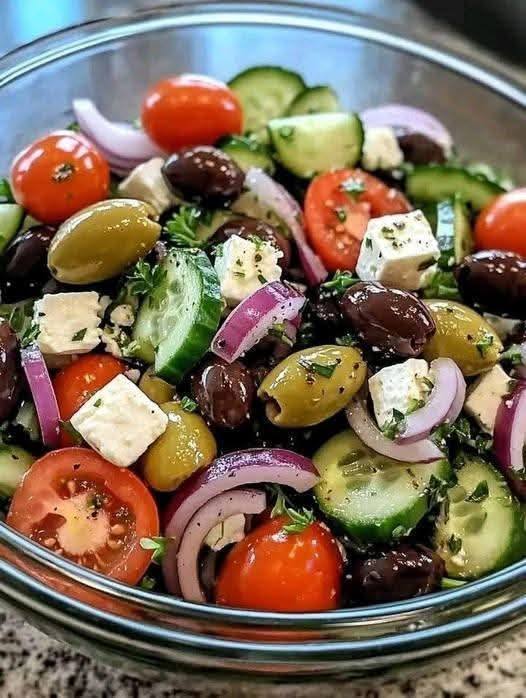
Classic Greek salad usually includes:
- tomatoes
- cucumber
- red onion
- olives
- feta cheese
- olive oil
- oregano
Traditional versions often do NOT include lettuce.
Flavor Profile
You taste:
- juicy tomatoes
- crisp cucumber
- salty feta
- briny olives
- sharp onion
- rich olive oil
Everything is balanced by acidity and freshness.
Ingredients (Serves 4)
Vegetables
- 3 ripe tomatoes
- 1 cucumber
- ½ red onion
- 1 green bell pepper (optional)
Cheese & Olives
- 4 oz feta cheese
- ½ cup Kalamata olives
Dressing
- 3 tbsp extra virgin olive oil
- 1 tbsp red wine vinegar
- 1 tsp dried oregano
- salt
- black pepper
Optional:
- lemon juice
- fresh parsley
- capers
Ingredient Breakdown
Tomatoes
Use:
- ripe firm tomatoes
Best types:
- Roma
- vine-ripened
- heirloom
Avoid:
- pale watery tomatoes
Cucumber
Traditional Greek salads often use:
- English cucumber
or - Persian cucumber
Why?
- thinner skin
- fewer seeds
- less bitterness
Red Onion
Adds:
- sharpness
- sweetness
- crunch
Feta Cheese
Feta is essential.
Good feta should be:
- creamy
- salty
- slightly tangy
Block feta is usually better than pre-crumbled.
Kalamata Olives
Kalamata olive add:
- saltiness
- richness
- deep savory flavor
Olive Oil
This salad depends heavily on olive oil quality.
Good extra virgin olive oil adds:
- pepperiness
- fruitiness
- body
Step-by-Step Instructions
STEP 1 — Prepare Tomatoes
Cut tomatoes into:
- wedges
or - large chunks
Traditional Greek salad uses larger rustic cuts.
Why Large Pieces?
Large pieces:
- keep texture juicy
- prevent mushiness
- hold dressing better
STEP 2 — Slice Cucumber
Slice into:
- half moons
or - thick rounds
Not paper-thin.
Greek salad should feel hearty.
STEP 3 — Slice Onion
Cut onion thinly.
If onion tastes too sharp:
- soak slices in cold water
- 5–10 minutes
Then drain.
STEP 4 — Combine Vegetables
In large bowl add:
- tomatoes
- cucumber
- onion
- bell pepper
- olives
STEP 5 — Make Dressing
Whisk:
- olive oil
- vinegar
- oregano
- black pepper
Salt lightly.
Remember:
- feta and olives already contain salt
STEP 6 — Add Feta
Place feta:
- on top in large slab
or - chunky pieces
Traditional Greek salads often keep feta in larger blocks.
STEP 7 — Finish
Drizzle dressing over salad.
Sprinkle:
- extra oregano
- cracked black pepper
What Finished Greek Salad Should Look Like
You want:
- bright colors
- glossy vegetables
- visible olive oil coating
- chunky rustic cuts
Not:
- watery
- overdressed
- finely chopped
Common Mistakes
| Mistake | Problem |
|---|---|
| Watery tomatoes | Weak flavor |
| Too much dressing | Heavy salad |
| Tiny cuts | Mushy texture |
| Cheap feta | Less flavor |
| Overmixing | Broken vegetables |
Why Restaurant Greek Salad Tastes Better
Restaurants often:
- use excellent olive oil
- use room-temperature tomatoes
- season properly
- avoid refrigerating tomatoes too cold
Important Tomato Tip
Cold tomatoes lose flavor.
Best practice:
- serve tomatoes near room temperature
Traditional Greek Style vs American Style
| Traditional Greek | American Greek |
|---|---|
| No lettuce | Often includes lettuce |
| Large feta slab | Crumbled feta |
| Rustic cuts | Smaller chopped pieces |
| Minimal dressing | Heavy dressing |
Optional Additions
Protein
Add:
- grilled chicken
- shrimp
- baked cod
- chickpeas
Excellent with the cod recipe you asked earlier.
Mediterranean Additions
Add:
- capers
- artichokes
- fresh dill
Crunch Additions
Add:
- toasted pita chips
- roasted chickpeas
Best Pairings
Greek salad pairs well with:
- grilled fish
- lemon pasta
- roasted potatoes
- pita bread
- hummus
Especially good beside:
- Lemon Garlic Spinach Spaghetti
- Garlic Butter Cod
Nutrition Overview
Approximate per serving:
- 200–300 calories
- healthy fats
- vitamin C
- calcium
- fiber
Storage
Refrigerator
Best eaten:
- same day
Still good:
- up to 24 hours
Why It Gets Watery Later
Salt pulls moisture from:
- tomatoes
- cucumber
Store dressing separately if making ahead.
Frequently Asked Questions (Q&A)
Q: Is lettuce traditional?
Usually no.
Traditional Greek salad focuses on vegetables, olives, and feta.
Q: Can I use black olives instead of Kalamata?
Yes, but Kalamata has more authentic flavor.
Q: Why does my salad taste bland?
Usually:
- weak tomatoes
- not enough olive oil
- under-seasoning
Q: Can I use bottled dressing?
Fresh dressing tastes much better.
Q: Why use oregano?
Oregano is one of the signature Mediterranean flavors.
Q: Can I make it ahead?
Yes, but add dressing close to serving.
Q: What protein goes best?
Grilled fish and chicken pair especially well.